Dr. Seuss Bible

“Dr. Seuss Bible” is a sketch by the Canadian comedy troupe The Kids in the Hall, whose eponymous TV show aired late-night on three networks from 1989 to 1994.  Even though CBC, HBO, and CBS all had rights to the show, only HBO chose to air this particular episode, due to anticipated controversy.  And so “Dr. Seuss Bible”—the final sketch of season 1, episode 20—aired only once, in 1990 on HBO.  And even though the network’s editing was and is much lighter than that of other networks, it still insisted on removing a shot of a nail going through Jesus’ hand, and it dubbed over the profanity that he utters in response.

Continue reading

Posted in Controversial Art, Jesus Kitsch | Tagged , , | 2 Comments

Tee Time: You Know the Answer

Wheel of Fortune Christian T-shirtHm, I think I’d like to buy some vowels.

Found at S^cred Clothesline.

Posted in Jesus Kitsch | Tagged , | Leave a comment

‘Lord Jesus, give me a deeper…’

At my church, as part of the Sunday morning liturgy, we spend time in both private and corporate confession. The corporate prayer, which we read aloud together as a body, is usually taken from Arthur Bennett’s The Valley of Vision (The Banner of Truth Trust, 1975), a collection of prayers which Bennett selected and adapted from the vast corpus of Puritan literature.

I wanted to share with you guys today’s excerpt, which I’ve supplemented with visual meditations:

“Lord Jesus, give me a deeper repentance, a horror of sin, a dread of its approach. Help me to flee it and jealously to resolve that my heart shall be yours alone.

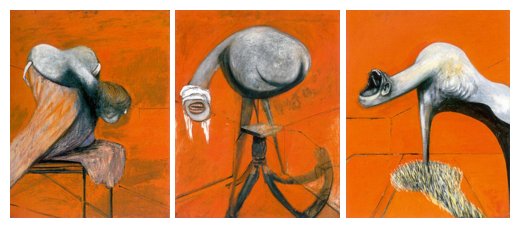
Francis Bacon, crucifixion figures

Francis Bacon, Three Studies for Figures at the Base of a Crucifixion, c. 1944. Oil on board support. Tate Collection.

Continue reading

Posted in Theology, Western Art | Leave a comment

Tee Time: Jesus and Banana Peppers

Jesus and banana peppersFound at zazzle.com.

Posted in Jesus Kitsch | Tagged , | Leave a comment

The Last Supper, in Ten Unusual Mediums

Leonardo da Vinci’s Last Supper (c. 1495) is one of the most readily recognized and reproduced images in the world.  Yet as commonplace as the scene has become, artists are still finding ways to make it new—by experimenting with different mediums, for example.

Here are ten playful renditions of The Last Supper, most of which were created in the last two decades.  All save one are compositional copies of Leonardo’s version, but instead of tempera, these artists used basic foods, household items, toys, or the walls of their workplace to create their masterpieces.

I’ve tried to order them from earliest to most recent, though some guesswork was involved, as not all of them are dated.

10.  Out of rock salt

The Last Supper by the Wieliczka salt miners

Antoni Wyrodek, "The Last Supper," 1936-45. Chapel of St. Kinga, Wieliczka Salt Mine, Poland.

Photo credit:  Wikimedia Commons

This bas-relief is located in the Chapel of Saint Kinga, a place of worship located 330 feet underground in the Wieliczka Salt Mine in Poland.  Excavation for this 10,400-square-foot chamber started in 1896 and continued until 1963 and was the work of three individual miners (Antoni Wyrodek and brothers Józef and Tomasz Markowski), who did it all in their spare time.  Continue reading

Posted in Western Art | Tagged , , , , , , , , , , | 2 Comments

Crucifying the Flesh

The title of this painting by Anthony Falbo is a reference to Galatians 5:24: “And those who belong to Christ Jesus have crucified the flesh with its passions and desires.”

This theme rings throughout Paul’s other writings as well:

  • “For we know that our old self was crucified with him so that the body of sin might be done away with, that we should no longer be slaves to sin.” (Romans 6:6)
  • “. . . if by the Spirit you put to death the deeds of the body, you will live.” (Romans 8:13)
  • “I have been crucified with Christ and I no longer live, but Christ lives in me.” (Galatians 2:20)
  • “May I never boast except in the cross of our Lord Jesus Christ, through which the world has been crucified to me, and I to the world.” (Galatians 6:14)
Crucifying the Flesh by Anthony Falbo

Anthony Falbo, Crucifying the Flesh. Oil on canvas.

These five verses seem to suggest that self-execution is a one-time thing that happens when you first come to know Christ. But when read in light of other Bible passages, we see that dying to self is actually an ongoing task.

In 1 Corinthians 15:31, Paul says, “I die daily.” Although he was referring to the physical threats on his life, Christians often receive this verse as a reminder of the importance of daily self-denial. This application, however, is more accurately gleaned from exhortative passages like Matthew 5:29-30, in which Jesus tells his listeners in graphic metaphor to cut off any part of themselves that keeps them away from God. Or Ephesians 4:22-25, in which Paul counsels the Christians in Ephesus against sins such as lying, stealing, and bitterness by telling them to put off their old sinful habits and to put on new ones.  Continue reading

Posted in Western Art | Tagged , , , | 6 Comments

Tee Time: HISWAY

HISWAY Christian t-shirtFound at ChristianShirts.net.

Posted in Jesus Kitsch | Tagged | Leave a comment

Snow White Jesus

Christ Amongst the Birds and Bees by Gillis II Congnet

Gillis Congnet the Younger, “Christ Amongst the Birds and Bees,” c. 1640-41.

OK, this painting of Jesus really reminds me of this more familiar scene:

Snow White with animals

Even his pose is Disney princess-ish! I can just picture those animated mouse ears bouncing on top of sing-along lyrics at the bottom of the frame: “With a smile and a song, / Life is just a bright sunny day…”

But on a more serious note: How often do we think of Jesus as a meek and mild feminine figure? Sweet, passive, sentimental. Always with a sunny disposition. Gliding through the streets of ancient Palestine engulfed in a bright aura and commanding instant trust wherever he went. Gently calling people to his side, dispensing hugs and smiles and kind words. Like Snow White.

Throughout the eighteenth to early twentieth centuries (and sometimes in the seventeenth, as the above painting evidences), Jesus was often pictured this way in art. Because we’ve been conditioned to see him as this sort of peaceful, nonthreatening presence, we often forget that the Jesus who bounced little kids on his knee and knelt down to wash the feet of his disciples was the same one who overturned the moneychangers’ tables and called the Pharisees by angry epithets; that the same Jesus who extended his arms in blessing also pronounced some pretty dreadful woes.

Yes, people were drawn to him, but just as many, probably more, were repelled by what he said, and still are. Not everyone loved him. Not everyone confided in him and gave him their undivided allegiance. He was ultimately crucified for what he said—for claiming to be God, and for challenging the people’s understanding of Jewish law.

Let’s not treat Jesus like a flat, innocuous character from a fairy tale. He is a fully rounded person who continually shocked people with the ways in which he did not fit a mold or meet most standards of respectability.

Update, 2/13/12: I found another Disney princess Jesus painting.

Jesus with animals

Margaret Tarrant, “Jesus and the Animals,” 1930s-40s?

Posted in Western Art | Tagged , , | Leave a comment

Tee Time: Jesus For Ever

punk JesusFound at ShirtyBusiness.com.

Posted in Jesus Kitsch | Tagged , | Leave a comment

‘Jesus is my air Plane’

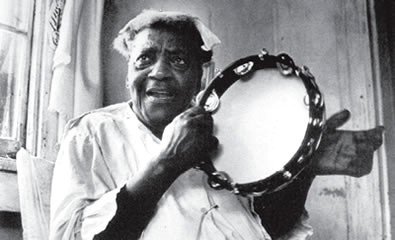
Sister Gertrude Morgan

"Sister Gertrude Morgan Singing and Playing the Tambourine." Photo by Sylvia de Swan, c. 1973.

Sister Gertrude Morgan (1900–1980) was a poet, a preacher, an artist, and a singer who loved Jesus.  She called him her husband, her doctor, and her airplane (yes, airplane), and claimed to have met with him in visions throughout her mid- and later life.

Born on a farm in Alabama, Sister Gertrude left school after third grade so that she could help her family with the farm work.  When she was 18, she moved to Georgia and became a nursemaid.  She also became an active member of Rose Hill Memorial Baptist Church, which is where “God moved me and had me to sanctify my life for him.”  Continue reading

Posted in Music, Western Art | Tagged , , , , , | Leave a comment