Beginning in the 1920s, the genre of the colossal Jesus statue emerged. Currently, there are twenty-seven Jesus statues worldwide (that I could find) that stand over 65 feet tall, base not included. Most of them are in Latin America, though none is as tall as the Buddha statues in Asia, which out-tower Jesus by several hundred feet. Wikipedia provides a helpful chart and list that compare the heights of the world’s tallest statues.
Rio de Janiero’s Christ the Redeemer statue, highlighted above in blue, is undoubtedly the most well known of all the Jesus statues, it being the original and also situated in a beautiful landscape of mountain and sea. It appears in the films Now, Voyager (starring Bette Davis); Alfred Hitchcock’s Notorious; Baz Luhrmann’s Romeo + Juliet; Rio; and 2012 (see trailer below; epic destruction snippet at 0:26). It has also appeared in several TV shows and video games.
Christ the Redeemer has been declared a protected monument by Brazil’s National Institute of Historic and Artistic Heritage (IPHAN), and one of the New Seven Wonders of the World by the New Open World Corporation. The idea for the statue was proposed in 1921 by the Catholic Circle of Rio, which solicited donations from Brazilian Catholic individuals and institutions. In 2006, a chapel was dedicated under the monument, which allows Catholics to hold baptisms and weddings there. Continue reading →
“The universal religion of humankind is: We develop a good record and give it to God, and then he owes us. The gospel is: God develops a good record and gives it to us, then we owe him. In short, to say a good person, not just Christians, can find God is to say good works are enough. . . . But this apparently inclusive approach is really quite exclusive. It says, ‘The good people are in, and the bad people are out.’ What does this mean for those of us with moral failures? We are excluded. So both approaches are exclusive, but the gospel is the more inclusive exclusivity. It says joyfully, ‘It doesn’t matter who you are or what you’ve done. It doesn’t matter if you’ve been at the gates of hell. You can be welcomed and embraced fully and instantly through Christ.'”
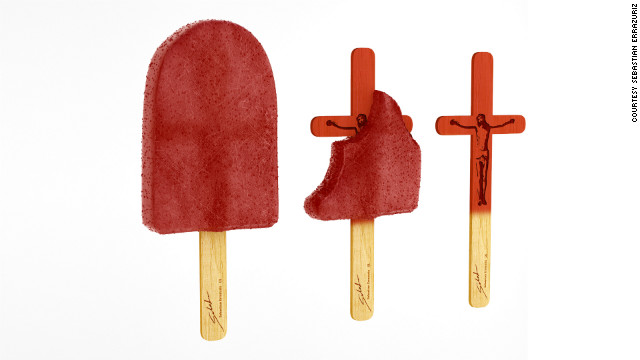
Back in May, to celebrate New York Design Week, Gallery R’Pure hosted an exhibition called “Love It or Leave It.” Featuring the work of ten U.S.-based designers, the exhibition invited its audience to “revisit objects and symbols that have forged the American landscape. . . . Each piece is a personal interpretation of some aspect of American life, be it celebratory, critical or simply observational. The exhibition intends to question what the American life is, whether real or perceived.”
For such a theme, of course at least one piece deriding Christianity is to be expected. Probably a crucifix put in some kind of irreverent setting or supplemented with props.
. . . Sebastian Errazuriz delivered—with 100 limited edition “Christian Popsicles,” as he calls them. Made of frozen red wine that Errazuriz says was inadvertently blessed by a Catholic priest (he had smuggled a cooler into Mass), the ice pops were handed out at a gallery party on May 19 as cocktail refreshments. An image of the crucified Jesus was laser-engraved onto the wooden sticks, which Errazuriz custom-designed to include a crossbar.
I promise I’ll start generating some original content very soon, but in the meantime, here’s a roundup of some articles and other tidbits I’ve come across lately.
Museum Day Live! on September 29: Hosted by Smithsonian magazine, this annual event will get you into any participating museum in the U.S. for free on that day. Visit the Smithsonian website to search for participating museums in your state and to print out your ticket. (You have to provide an e-mail and postal address.)
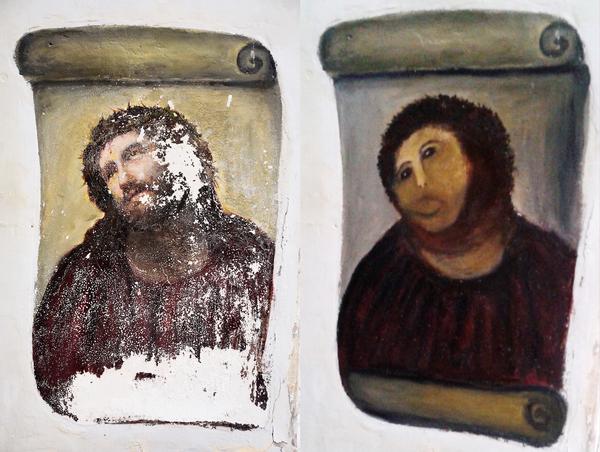
Before and after. (AP Photo/Centro de estudios Borjanos)
“On the Vocation of the Artist” by W. David O. Taylor: I’ve really been enjoying this series, now in part 3 (“The Artist as Prophet”). (Read parts 1 and 2.) It’s very thoughtful and well-researched, bringing in lots of voices on the topic.
“When a Sermon Becomes a Poem” by John Piper: Most people know Piper as a Christian speaker and author, but he is also an occasional poet. His latest poem is called “The Truth: A Meditation on 2 Timothy 3:14-17.”
“Gloria Ssali’s In Gethsemane” by Victoria Jones: Yes, this piece is by yours truly—I’m contributing content to ArtWay.eu now! This is a revised excerpt from a blog post I wrote back in April 2011 as part of a series on Jesus in Gethsemane.
The above song by country/folk singer-songwriter Kate Campbell was performed at the Baptist World Alliance Congress in Honolulu on July 30, 2010. (The song also appears on her 2008 album Save the Day.) Perceptive and judgment-free, the song moves through a few different approaches people take in their search for Jesus. Some look for him in archaeological records or in other lines of historical evidence. Others travel to the Holy Land as pilgrims, seeking spiritual proximity to Jesus via physical proximity to the places of his birth, ministry, and death. Some seek supernatural signs of his existence in the everyday, right where they’re at. And still others seek nearness to him through the use of devotional images or objects—icons, relics, and the like.
In the chorus, Campbell references two specific Jesus encounters that are recorded in the Gospels: Zacchaeus, the wealthy tax collector who sought forgiveness for his corrupt business practices (Luke 19:1-10); and the woman with the issue of blood who, with desperation and faith, pushed through a crowd of people in pursuit of Christ’s healing power (Luke 8:40-48). In both passages, Jesus is described as bringing salvation to these individuals. Countless others too were captivated by this man who spoke with such authority and performed miracles unlike those of the magicians. They followed him up mountains (to hear sermons, to receive mystical visions) and “down to the sea” of Galilee (for baptism, for feasting). Even two thousand years later, people are still pressing in to see and to touch him—and to be seen and touchedbyhim. Continue reading →

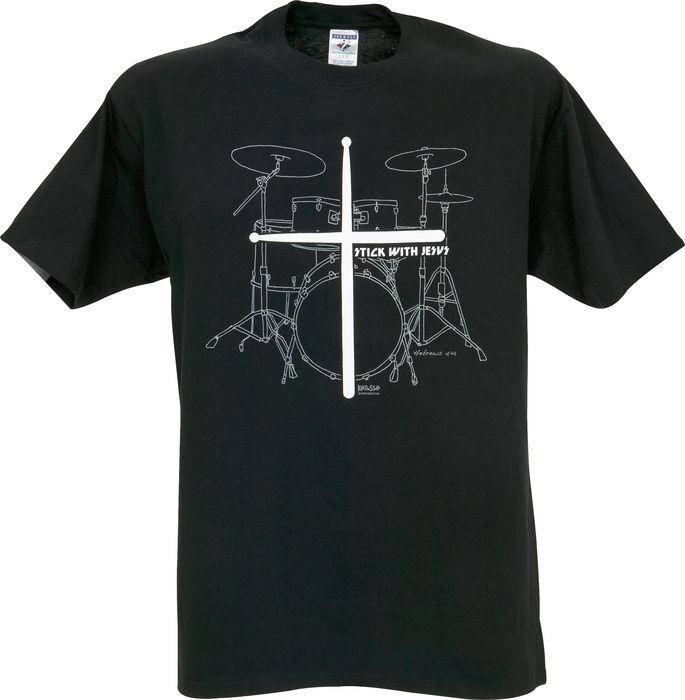
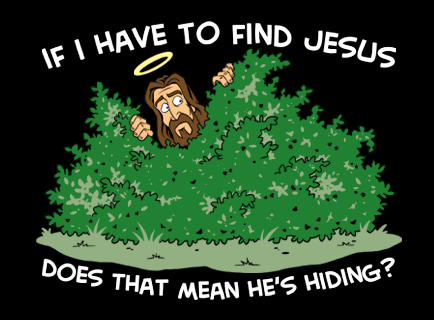
 Found at www.c28.com.


 The Jesus Question