The Jesus Sutras (Part 3): The Stone Sutra

(For an introduction to this series, read Part 1.)

The Religion of Light teachings are like the resplendent sun: they have the power to dissolve the dark realm and destroy evil forever. (Stone Sutra 2:22)

I’ve been going back and forth on whether I want to divide posts in this series by sutra or by topic, seeing as there is a lot of overlap. At last I’ve decided I’ll try to do it by sutra, so we’ll see how it goes.

Here’s a list of all eight Jesus Sutras:

Early Sutras (written/adapted by Persians in the late 630s–50s):

  • The Sutra of the Teachings of the World-Honored One
  • The Sutra of Cause, Effect, and Salvation
  • The Sutra of Origins
  • The Sutra of Jesus Christ

Late (Liturgical) Sutras (written by Chinese monks primarily at the end of the eighth century, though one comes from 720):

  • Taking Refuge in the Trinity
  • Invocation of the Dharma Kings and Sacred Sutras, or Let Us Praise
  • The Sutra of Returning to Your Original Nature
  • The Christian Liturgy in Praise of the Three Sacred Powers, or The Supreme

And then, there’s a ninth “Stone Sutra,” if one wants to call it that. I’ll start there, as it offers a good overview of what can be found in the other eight.  Continue reading
Posted in Non-Western Art, Theology | Tagged , , , , , , | 9 Comments

The Jesus Sutras (Part 2): The Religion of Light

(For an introduction to this series, read Part 1.)

To penetrate the mysteries, to bless with a good conscience, to be great and yet empty, to return to stillness and be forgiving, to be compassionate and to deliver all people, to do good deeds and help people reach the other shore—these are the great benefits of our path of cultivation. To calm people in stormy times, to help them understand the nature of things, to maintain purity, to nourish all things, to respect all life, and to answer the needs of those whose beliefs come from the heart—these are the services the Religion of Light Church can offer. (Stone Sutra 3:54-55, trans. Martin Palmer)

This passage was written onto a stele in Xian by Chinese Christian monks in 781 AD, along with about 2,000 other Chinese characters that together form a stone document that is as much a theological treatise as it is an early history of Christianity in China; religion scholar Martin Palmer refers to this text as the “Stone Sutra,” or “Monument Sutra.” Essentially, the two verses quoted above are a mission statement—the Chinese Christians describe who they are, what they stand for, and how they plan to serve the community. They also thank God for blessing them with the power, through his Spirit, to enact these divine virtues. Religion of Light(I know this sounds egregiously like eisegesis, but I promise, I’m interpreting it in light of the full text of the Stone Sutra, which goes into greater detail about the incarnation, death, resurrection, and ascension of Ye Su [Jesus], as well as his salvific role. More on this in later posts.)

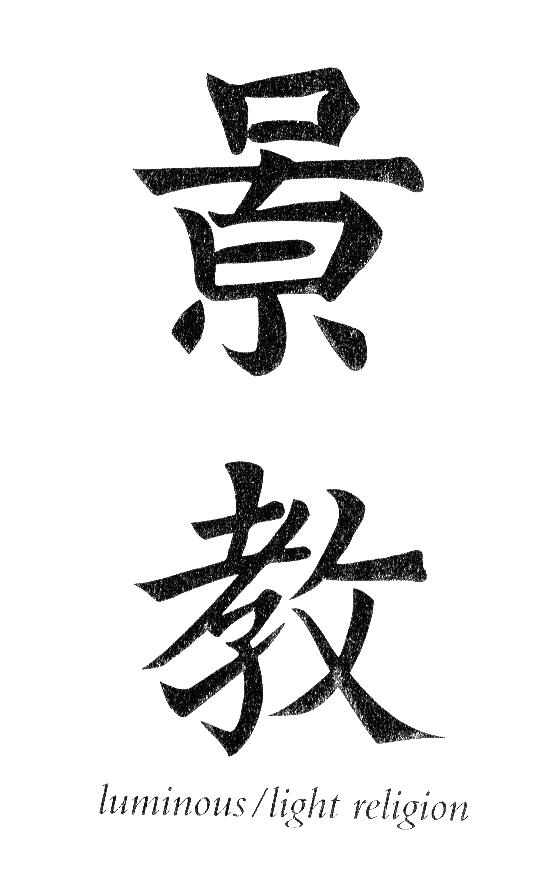
I call them “Chinese Christians,” but really, the name they gave to their new faith was “the Religion of Light.” (See the two Chinese characters they used at right.)   Continue reading

Posted in Theology | Tagged , , | 3 Comments

Tee Time: Nobody Puts Baby Jesus in the Corner

Found at homebrewedtees.com.


Posted in Jesus Kitsch | Tagged | Leave a comment

The Jesus Sutras (Part 1): Introduction

Several months ago I watched a BBC documentary series by Oxford professor Diarmaid MacCulloch, called A History of Christianity. In the first DVD, MacCulloch travels to China and discusses, on site in Xian, the existence of a Christian community that flourished there in the seventh century, and contributed greatly to the faith.

The fact that Christianity had taken root in China as early as the 600s was news to me. Of course I had always known that Christianity started in Asia, but when I reflect on its origins, I tend to follow the strand that traveled straight from the Near East to Rome, forgetting that Christianity also spread out in other directions and developed unique forms among those cultures in which it landed. The European Christianity out of which American Christianity grew is only one of many Christian traditions that span the globe, and by no means the “truest” or most authoritative version, even though it wields the most power.  Continue reading

Posted in Theology | Tagged , | 21 Comments

Amputated Christ

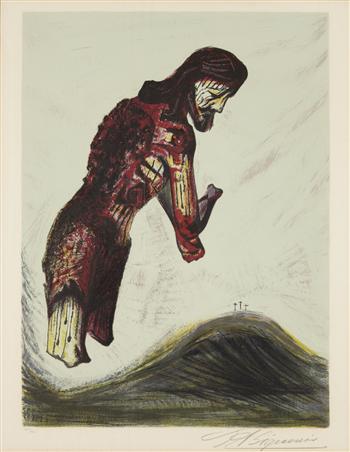
Amputated Christ by David Alfaro Siqueiros

David Alfaro Siqueiros, Amputated Christ, 1968. Lithograph.

We, the church, have amputated the limbs of Christ. By failing to be them. When Jesus ascended to heaven, he left his Spirit with us, to indwell us, to empower us to be Christ to others, but we so often fail to live up to this calling.

In David Alfaro Siqueiros’s colored lithograph, Jesus is trying to move but cannot. It used to be that he walked about freely with purpose and intention, healing people, feeding people, advocating for the powerless and the oppressed, and sharing the good news of a coming kingdom, and how one might become a part of it. But today it seems that Christ has become a quadriplegic. We many times have no problem being his mouth, but what’s just as important is that we be his hands and feet.  Continue reading

Posted in Non-Western Art | Tagged , , | 1 Comment

Tee Time: Meantto Die (Mountain Dew)

Meant to Die t-shirtFound at adifferentdirection.com.

Posted in Jesus Kitsch | Tagged | Leave a comment

‘As kingfishers catch fire’

As kingfishers catch fire, dragonflies dráw fláme;
As tumbled over rim in roundy wells
Stones ring; like each tucked string tells, each hung bell’s
Bow swung finds tongue to fling out broad its name;
Each mortal thing does one thing and the same:
Deals out that being indoors each one dwells;
Selves—goes itself; myself it speaks and spells,
Crying Whát I do is me: for that I came.
Í say móre: the just man justices;
Kéeps gráce: thát keeps all his goings graces;
Acts in God’s eye what in God’s eye he is—
Chríst—for Christ plays in ten thousand places,
Lovely in limbs, and lovely in eyes not his
To the Father through the features of men’s faces.

–Gerard Manley Hopkins

Hopkins is saying that just as all creatures and objects—be they bird, insect, stone, string, or bell—invariably sound forth their essence, so does man, and man’s essence is Christ.   What do you make of that?

Posted in Uncategorized | Tagged | Leave a comment

Coat-Hanger Crucifixes and Match-Head Busts

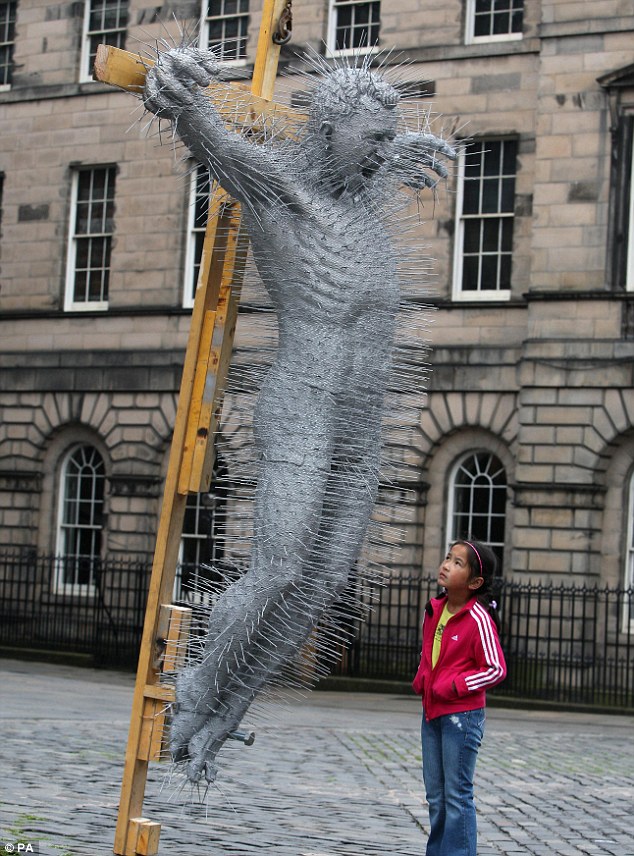
Scottish artist David Mach has a major biblical-themed exhibition going on now at the City Art Centre in Edinburgh to commemorate the 400th anniversary of the King James Bible.  It’s called “Precious Light,” and it’s made up of more than 70 collages and six sculptures, taken from some of the Bible’s most epic stories.

Mach admits that he is not religious, but he is intrigued, he says, by the heavy, emotion-packed content of the Christian Bible, and its true-to-life portrayal of the human drama.  “The Bible has it all—war, famine, sex, death, pestilence, jealousy, revenge. … Struggle, pain, love death—it’s all in there,” he said (here and here).  “As an artist I think I would struggle to find a richer source of inspiration. … No single text has had such a profound effect on our language, culture, and thoughts as this book.”

The most compelling event chronicled in the Bible, the one to which all earlier stories point, is the crucifixion of Jesus.

Die Harder by David Mach

David Mach, “Die Harder,” 2010. This photo was taken by the Daily Mail in July 2010, outside of St. Giles’ Church in Edinburgh. The piece is now on exhibit on the second floor of the Edinburgh City Art Centre.

The crucifix pictured above is unique in that it is made not of marble, bronze, or terracotta, but of repurposed coat hangers, welded together around a plastic positive and then nickel-plated.  Continue reading

Posted in Western Art | Tagged , , , | 2 Comments

Tee Time: “Like”

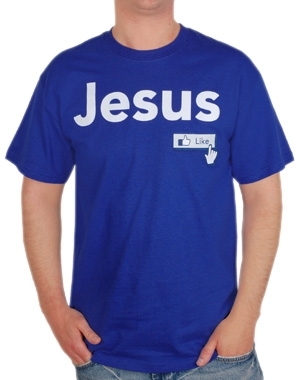
Like Jesus t-shirtFound at c28.com.

Posted in Jesus Kitsch | Tagged | Leave a comment

The Rob Bell controversy and the video that started it all

Sorry, guys—I’ve been out of commission for the last week while writing a paper for my book marketing course at BU.  I’m writing about book trailers, and whether or not they’re effective marketing tools.

One book trailer that definitely impacted book sales is Rob Bell’s trailer for Love Wins (published by HarperOne).  It was released five weeks before the book’s original on-sale date, and when it was, it ignited a national controversy.  Watch it, and you’ll see why.


Continue reading

Posted in Controversial Art, Film | Tagged , , | 2 Comments