Forbidden Art in Russia

This August, a court in central Russia banned this painting from all future exhibitions and publications, deeming it “religiously offensive” and “extremist.”

Mickey Mouse Sermon on the Mount

Alexander Savko, "Jesus as Mickey Mouse," 1995, from the Mickey Mouse’s Travels Through Art History series.

This piece depicting Mickey Mouse delivering the Sermon on the Mount was part of a 2007 exhibition at the Andrei Sakharov Museum in Moscow, called “Forbidden Art.”  The organizers of the exhibition, Andrei Yerofeyev and Yury Samodurov, were charged with inciting religious hatred, a crime under Article 282 of Russia’s criminal code.  They were found guilty and fined 200,000 rubles and 150,000 rubles respectively (about $6,200 and $4,600).   Continue reading

Posted in Controversial Art | Tagged , , , | Leave a comment

Mako Fujimura on Christianity and Art

I just came across this Patrol Magazine Q & A with Japanese-American Christian artist Mako Fujimura.  The topics of discussion were, among other things, what makes art “Christian,” Jesus’ and the church fathers’ Eastern roots, the offensiveness of certain gospel events and characterizations in other cultures, Christianity and Zen, the role of orthodoxy in art, the distinction between icon and idol, and God as the source of all beauty.

Posted in Non-Western Art | Leave a comment

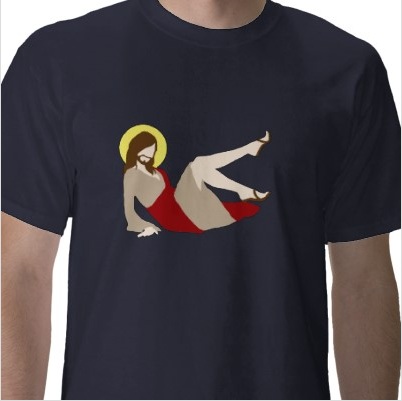
Tee Time: Sexy Jesus

Sexy Jesus T-shirtPerhaps this T-shirt is a reference to the song “Rock Me Sexy Jesus” from the movie Hamlet 2?  In the movie, Dana Marschz, a recovering alcoholic and high school drama teacher, writes and stages a sequel to Hamlet in which the prince and Jesus, with the use of a time machine, try to save Gertrude and Ophelia.

Here’s Jesus’ big dance number: 

T-shirt found at zazzle.com.

Posted in Jesus Kitsch | Tagged , , , | Leave a comment

The Jesus Sutras (Part 10): ‘He is the scaling ladder’

This is my final post for the Jesus Sutras series (read Part 1 here). I highly recommend you check out Martin Palmer’s book The Jesus Sutras, as there is much more to glean from these historical and poetic texts, beyond what I have addressed. For instance:  a distinct conception of Satan (“San nu”) and hell; their upholding of a Christian moral code known as the “Four Essential Laws”; Jesus as the embodiment of wu wei; and so on. Plus, the book will help you understand what happened to this particular strand of Christianity in China (which scholars refer to as “Nestorian”) following the composition of the sutras.

Chinese landscape painting

Wang Hui, Clearing After Rain Over Springs and Mountains, 1662. Hanging scroll/ink on paper, 44.5 x 17.75 in. Metropolitan Museum of Art.

I think it’s fitting to conclude with this parable from the Sutra of Returning to Your Original Nature 3:27-39, which is attributed to Jesus:

“I will tell you a story. There was a sick man who heard people talk about this precious mountain. Day and night he longed to reach it—the thought never left him. But the mountain was high and miles away and he was very crippled. He longed to realize his dream, but he couldn’t. But he had a close relative who was wise and resourceful. And this man had scaling ladders brought and steps cut and with some friends he levered and pushed the sick man up until he reached the summit. And there, he was healed.

“Simon, know this: people coming to this mountain were confused and unhappy because of their worldly desires. They had heard the truth. They knew it could lead them to the Way. So they tried to scale this mountain, but in vain—love and faith had all but died in them.

“Then the Compassionate Knowing One came like the close relative and taught them with skill and sincerity so they knew that He is the scaling ladder and the steps cut in stone by which they can find the true Way, freed of their weight forever.”

Posted in Non-Western Art, Theology | 5 Comments

The Jesus Sutras (Part 9): Refuge and Return

(For an introduction to this series, read Part 1.)

Shower us with Your Healing Rain!
Help us to overcome, give life to what has withered,
and water the roots of kindness in us.
—The Supreme, vv. 23-24

Development of a Christian liturgy

The Late Jesus Sutras, also known as the Liturgical Sutras, refer to four Chinese Christian texts that were written in the late eighth century—with the exception of the first one, which was written in 720. The Chinese gave them the following names:

  1. Taking Refuge in the Trinity
  2. Invocation of the Dharma Kings and Sacred Sutras, or Let Us Praise
  3. The Sutra of Returning to Your Original Nature
  4. The Christian Liturgy in Praise of the Three Sacred Powers, or The Supreme

Unlike the early sutras I wrote about in previous posts, these sutras were composed by the Chinese monks themselves, without the oversight of foreign missionaries. The church in China had by this point taken the leap from missionary church to truly indigenous church.  Continue reading

Posted in Non-Western Art, Theology | Tagged , , , , | 4 Comments

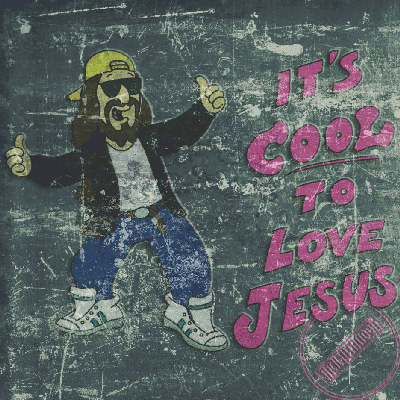
Tee Time: It’s Cool to Love Jesus

It's Cool to Love JesusFound at TheILSNetwork.com.

Posted in Jesus Kitsch | Tagged | Leave a comment

The Jesus Sutras (Part 8): The Virgin “Mo Yan”

(For an introduction to this series, read Part 1.)

So God caused the Cool Breeze to come upon a chosen young woman called Mo Yan, who had no husband, and she became pregnant. The whole world saw this, and understood what God had wrought. The power of God is such that it can create a bodily spirit and lead to the clear, pure path of compassion. Mo Yan gave birth to a boy and called him Ye Su, who is the Messiah and whose father is the Cool Breeze.

Sutra of Jesus Christ 5:1-4

Chinese Madonna and Child

Tang Yin, Madonna and Child, c. 1500-23. Watercolor on silk. Housed in the Field Museum, Chicago.

Virgin and Child

Salus Populi Romani (Protectress of the Roman People), 8th-13th century (disputed). Borghese Chapel, Santa Maria Maggiore, Rome.

The scroll painting to the left is the earliest extant Madonna and Child portrait from China. It depicts the infant Jesus with a forelock knotted in the Chinese style, making a blessing gesture with his right hand. Scholars believe it is based on copies of the famous painting Salus Populi Romani, which, it is believed, Franciscan missionaries brought to China in the thirteenth century.  Continue reading

Posted in Non-Western Art, Theology | 11 Comments

The Jesus Sutras (Part 7): Mindfulness

(For an introduction to this series, read Part 1.)

The Sutra of Cause, Effect, and Salvation, in addition to addressing the issue of karma, exhorts people to live in continuous mindfulness of Christ’s work on the cross. Mindfulness (sati) is a key practice in Buddhism. It basically means having a pure awareness that extends to all aspects of life. It’s a way of being fully present to what you’re doing at every moment throughout the day, to really experience things directly and immediately, and with loving attention—the ground you walk on, for example, or the texture of your food, or the sensation of cold, or the rhythm of your breath. It also means seeing things exactly as they are, without distortion.

This Buddhist practice is, in most ways, very compatible with Christianity. Christians should live in constant awareness of God’s goodness and grace and should be grateful for all experiences, whether good or bad, because we know that God has allowed them for our growth and his glory. That’s mindfulness—embracing, accepting, watching, comprehending, and participating fully in the ongoing process of living.  Continue reading

Posted in Theology | Tagged | 2 Comments

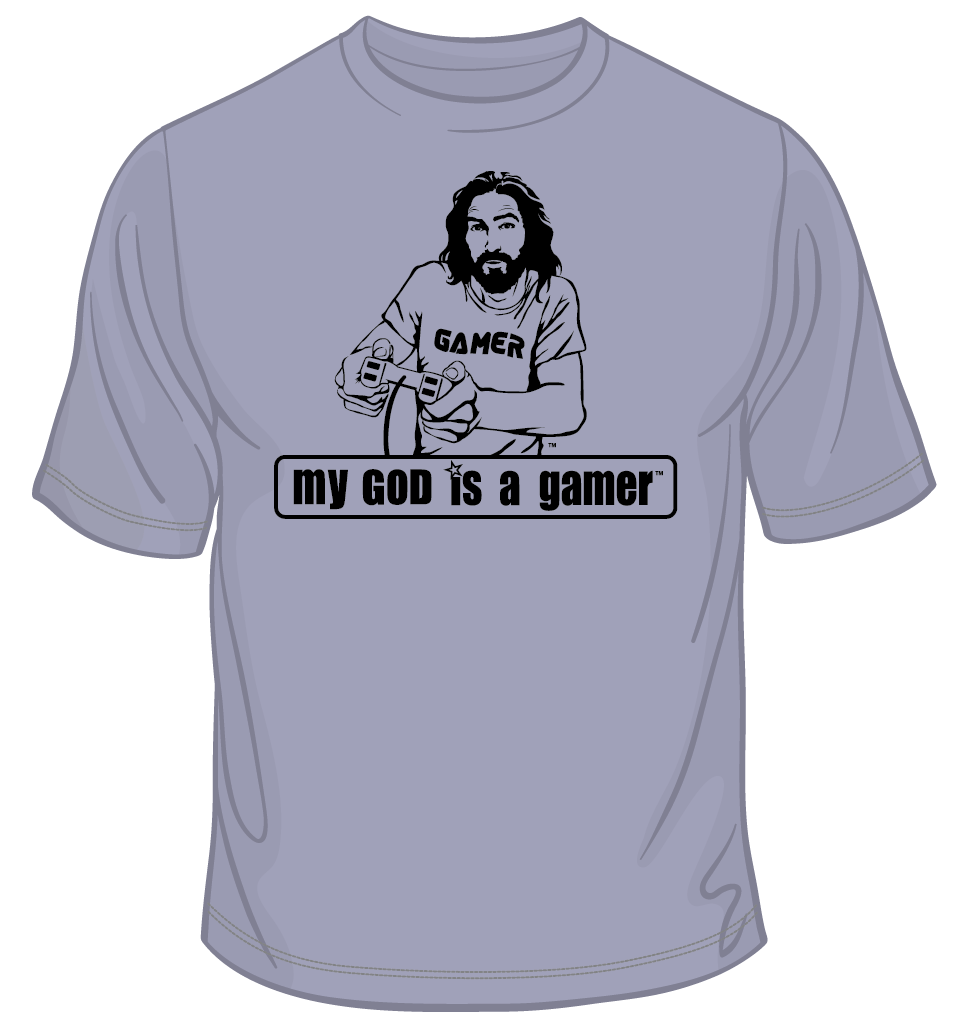
Tee Time: My God is a Gamer

video game Jesus

Found at MyGodDesigns.com.

Posted in Jesus Kitsch | Leave a comment

The Jesus Sutras (Part 6): Karma and Rebirth

(For an introduction to this series, read Part 1.)

“I am the owner of my karma. I inherit my karma. I am born of my karma. I am related to my karma. I live supported by my karma. Whatever karma I create, whether good or evil, that I shall inherit.”—The Buddha, from the Upajjhatthana Sutta (part of the Pali Canon of Theravada Buddhism)

“Not in the sky, nor in the middle of the ocean, nor in the cave of a mountain, nor anywhere else, is there a place, where one may escape from the consequences of an evil deed.”The Dhammapada, verse 127

“He does not treat us as our sins deserve or repay us according to our iniquities. For as high as the heavens are above the earth, so great is his love for those who fear him; as far as the east is from the west, so far has he removed our transgressions from us.”Psalm 103:10-12

Trapped by our actions

Many Easterners, whether religious or not, believe in the doctrine of karma (Sanskrit for “deed” or “action”). This concept refers to a universal law of cause and effect in which every volitional act brings about a certain result (vipaka)—evil actions produce punishments, and good actions produce rewards. Different schools and traditions say different things about how the fruits of karma are dispensed—whether naturally, or by some divine being—and what those fruits actually are. But the main idea is that karma locks you into a continuous cycle of death and rebirth (samsara). When you die, you die with a combination of good and bad karma—merit (punya) and demerit (papa)—resulting from your actions in all previous lives. In order to uphold justice, you must be reborn into another body so that your good actions awaiting reward can receive it, as can your bad actions awaiting punishment. The souls of those with higher merit are reincarnated in higher forms.  Continue reading

Posted in Theology | Tagged , | 13 Comments