
Several passages in the Hebrew Bible (which Christians refer to as the Old Testament) prophesy that David’s throne will be established forever: 2 Samuel 7:12–16; Psalm 89:3–4, 132:11; Isaiah 16:5; and Jeremiah 33:17. Jews, therefore, have taken that to mean that the messiah, the future deliverer of Israel, will be descended from David. Christians interpret these prophecies as having been fulfilled in the person of Jesus, to whom they attach the title Christ (Gr.; Heb. Messiah), the “anointed one” of God.
Christians also make the unique claim that Jesus was born of a virgin, per the prophecy of Isaiah 7:14 (which Jews say Christians have misunderstood, the Hebrew word almah not necessarily referring to a person who has not had sexual intercourse).
The Christian confession of these two truths—that Jesus is the messiah in the line of David whom God promised to Israel, and that he was conceived by a virgin—creates some complications of ancestry and inheritance.
How does one reconcile the two very different genealogies of Jesus given by Matthew and Luke?
The Bible contains two different genealogical records for Jesus: one in Matthew (1:1–17), the other in Luke (3:23–38).
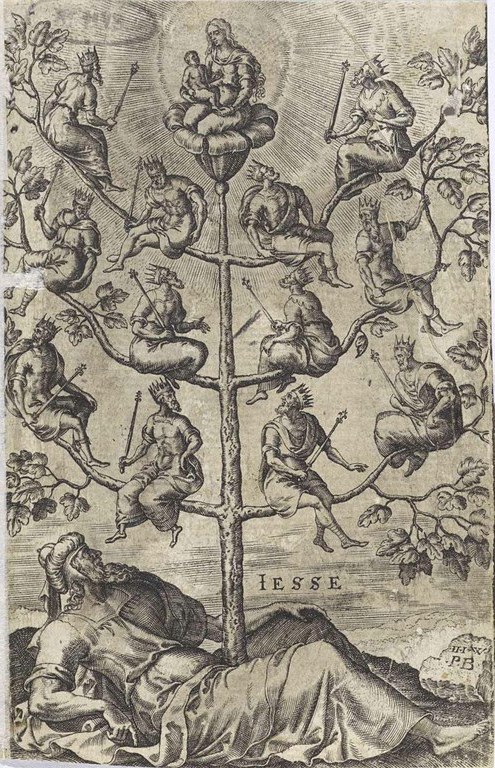
Matthew, whose purpose is to present Jesus as king of the Jews, starts with Abraham, the father of the Hebrew nation, and traces the line of descent through the royal line of David all the way down to Jesus. He skips several generations, though, omitting the names of some of the wicked kings of Judah.
Luke, in backward fashion, starts with Jesus and moves all the way back to Adam, showing that Jesus is the fulfillment of the hopes of all people.
The problem is, the two lists don’t match. Not even close. Well, they match up until David’s name, then they diverge, with Matthew tracing a line of descent through David’s son Solomon, and Luke tracing a line of descent through David’s son Nathan. They come together again at Shealtiel and Zerubbabel, but then they diverge again until finally arriving at Joseph.
Biblical scholars have developed various theories to account for such differences. I’ll summarize the two most common ones.
OPTION 1: Matthew’s genealogy goes through Joseph’s biological father, whereas Luke’s goes through Joseph’s legal father by levirate marriage. Continue reading


.jpg)







 The Jesus Question