You’re probably at least somewhat familiar with the medieval practice of manuscript illumination: the elaborate decoration of a handwritten text with illustrations, borders, and drop caps, all pressed or dusted with gold leaf.

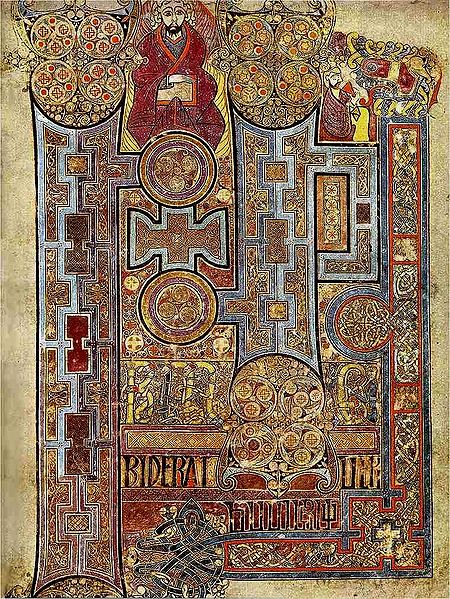
Book of Kells, fol. 292r, Ireland, ca. 800. Incipit to John: “In principio erat verbum” (“In the beginning was the Word”)
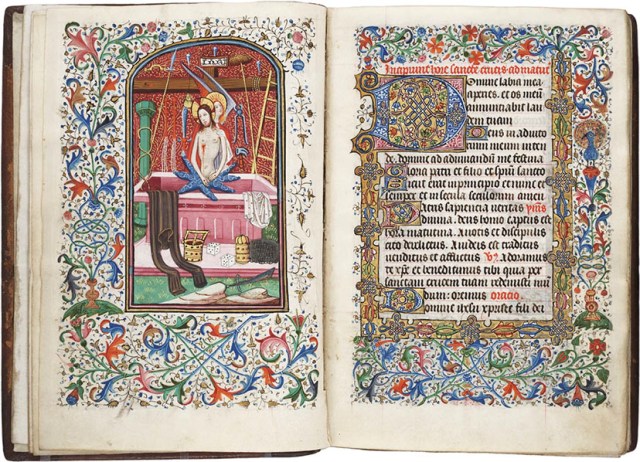
Book of Hours, fols. 7v-8r, Bruges, Flanders, 1425
The term “illumination” refers to the literal “lighting up” of the book pages with bright flecks of silver and gold. But the word has a more spiritual meaning, too, which is to interpret the given text, to elucidate it, to celebrate it; to shine a light on beauty and help to bring it out more strongly. In the Middle Ages, texts were illuminated using representational art—art that depicts recognizable forms. So an illumination of Luke 2, for example, would likely show the baby Jesus in a manger.
When the printing press was invented in the fifteenth century, though, it pretty much put a kabosh on manuscript illumination. Books could be made much faster and more cheaply now, so they ceased being an art form and became a commodity instead.
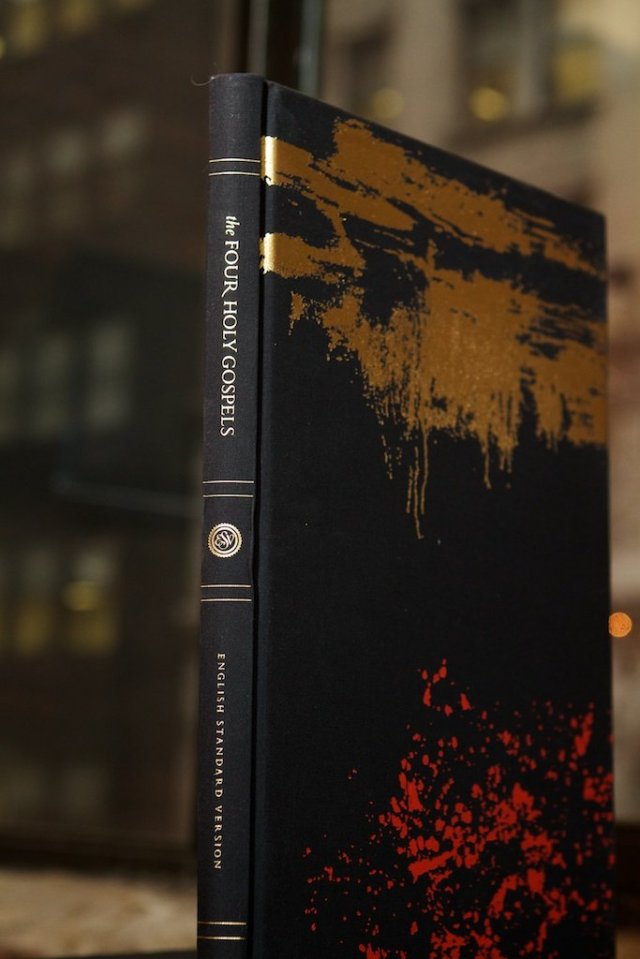 Kudos to Crossway for reviving the long-forsaken process of manuscript illumination, for bringing art back into direct conversation with the Gospel texts through its Four Holy Gospels project.
In 2009, Crossway President Lane Dennis commissioned New York artist Makoto Fujimura to illuminate the four canonical Gospels in commemoration of the four hundredth anniversary of the King James Bible. Over the course of just nine months, Mako created five major paintings, eighty-nine chapter-heading letters, and 140-plus pages of embellishments for the project. The Four Holy Gospels, as the finished volume is called, is the first illuminated manuscript to feature abstract contemporary art in lieu of traditional representational illustrations. It truly is the only one of its kind, but I hope there will be more to follow from other artists in the future. Continue reading →

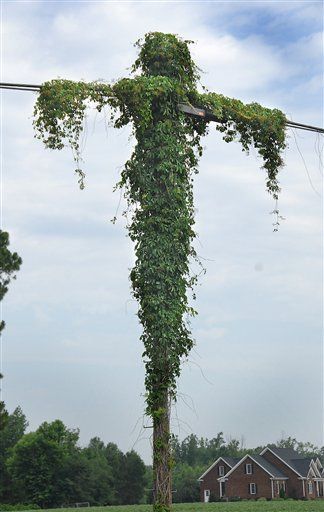


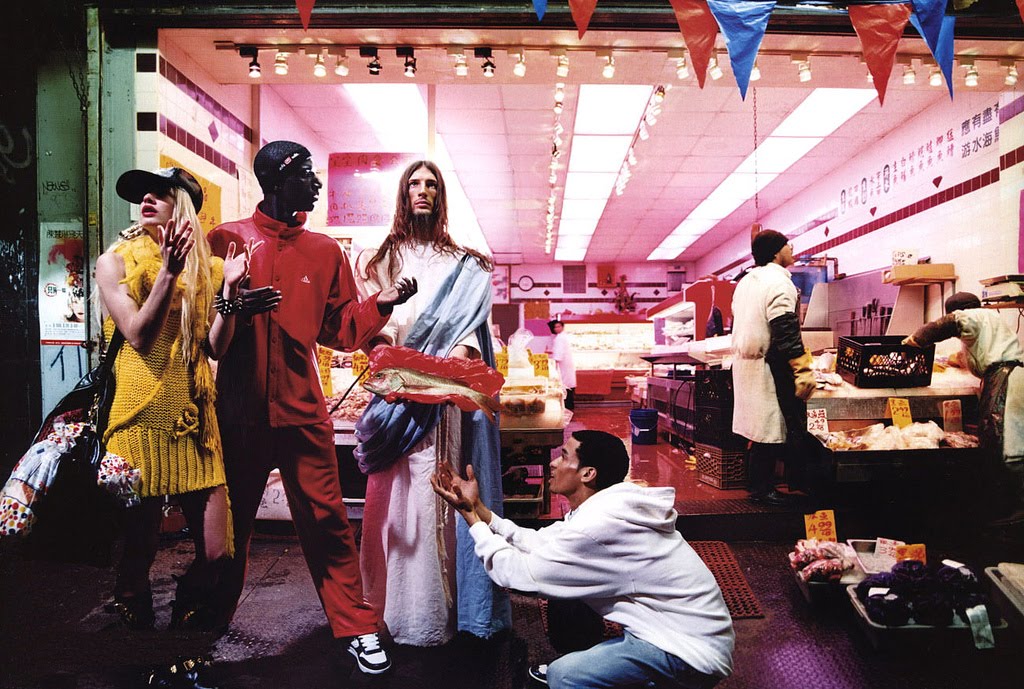




 The Jesus Question